
Insights



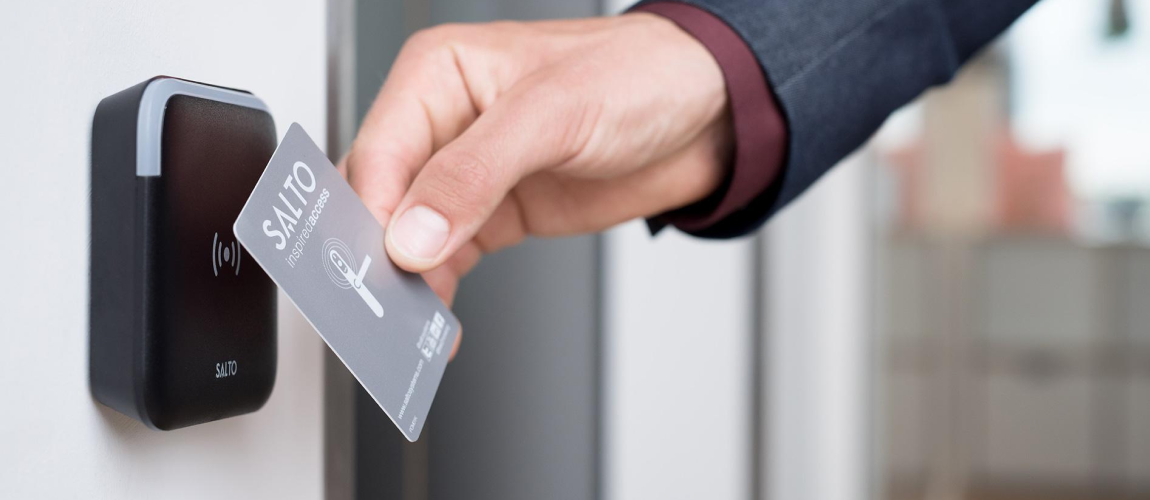
Office security has changed. For many businesses, the challenge is no longer simply locking the front door at the end of the day. Modern offices often include shared entrances, internal meeting rooms, server spaces, store cupboards, staff-only areas, multi-tenant arrangements, flexible working patterns, and a steady flow of visitors, contractors, and delivery personnel.
In that environment, traditional key-based security can quickly become difficult to manage. It offers limited visibility, can be time-consuming to administer, and often creates practical issues when teams change, spaces are reconfigured, or a lost key raises concerns about who may still be able to get into the building.
That is why wireless access control for offices has become an increasingly attractive option. Rather than relying on a purely mechanical system, wireless access control combines electronic locks, readers, credentials, and management software to give businesses more flexible control over who can access each part of the workplace and when they can do so.
For office managers, facilities teams, landlords, and responsible persons, the appeal is not only stronger security. It is also about easier administration, reduced disruption during installation, and a system that can adapt as the office changes over time.
The way offices are used has changed significantly over the past decade. Many organisations now operate hybrid working patterns, managed workspaces, serviced offices, or department-specific access arrangements. Teams may not be in the building every day, while visitors and contractors may need temporary access to certain areas but not others.
Traditional locks and keys struggle in this type of environment. A physical key cannot easily reflect time-limited permissions, occupancy changes, or different access levels across a site. It also becomes much harder to manage when keys are copied, lost, not returned by former staff, or circulated informally between teams.
For businesses that want stronger control without turning every change into a lock replacement exercise, wireless access control offers a much more practical solution. It enables permissions to be assigned and adjusted digitally, which is especially useful in modern offices where layouts and staffing patterns rarely stay static for long.
Wireless access control is an electronic system that manages entry to doors and secure areas without requiring every lock to be connected through extensive hard-wired cabling. In many office environments, battery-powered electronic locks or cylinders communicate with the wider system, while software allows authorised users, schedules, and credentials to be managed centrally.
The credential itself might be a fob, key card, PIN, mobile phone, or a combination of methods depending on the system design. The key point is that access is controlled by permissions rather than by possession of a traditional metal key alone.
This differs from a fully hard-wired approach because the system can often be deployed with less cabling at the door. That makes wireless access control particularly attractive in offices where disruption must be kept to a minimum, where doors are spread across multiple floors or suites, or where the building fabric makes major cabling works less desirable.
Wireless does not mean isolated or less capable. In a well-designed office system, wireless locking devices still form part of a managed access control strategy, allowing facilities teams to review permissions, respond to security concerns, and maintain a clear picture of how access is being controlled across the premises.
One of the main benefits of wireless access control for offices is that it can reduce the amount of installation work required at each door. Salto states that its electronic locks are wireless and battery-operated, which makes them easier to install using standard tools and suitable for many existing doors. This is especially useful in commercial premises where lengthy access works may be inconvenient or disruptive.
In practical terms, that can mean quicker upgrades in occupied offices, less disturbance to staff, and a more straightforward route to improving security during refurbishments or fit-outs. Instead of extensive rewiring through finished interiors, office managers can often take a more phased and flexible approach.
This matters in real workplaces. Businesses do not always have the option of shutting down a floor for major security upgrades. In multi-tenant buildings, managed offices, and operational headquarters, works often need to be planned around normal activity. Wireless systems are well suited to that kind of phased delivery because individual doors or areas can often be upgraded with far less disruption than a fully wired replacement programme.
Wireless access control gives businesses more precise control over who can enter each area. Instead of issuing one key that may open several doors, managers can assign permissions based on role, time, department, or location. That can help separate general office space from server rooms, finance offices, document stores, meeting suites, plant rooms, and other restricted areas.
It also makes lost or unreturned credentials easier to manage. With traditional keys, a missing key may create uncertainty until locks are changed. With an electronic system, permissions can often be amended or withdrawn much more quickly, reducing the risk that an old credential still gives someone unauthorised access.
This is particularly valuable in offices with staff turnover, shared occupancy, cleaning teams, contractors, or short-term users. A digital system is simply more responsive to change, which helps reduce the gap between what the business thinks its security arrangement is and what is actually happening on the ground.
Another important advantage is visibility. Many access control systems provide an audit trail showing who has used a door and when. For office managers, that can help support investigations, improve accountability, and highlight patterns that may require further review. Salto positions this kind of insight as part of its management tools for modern businesses, alongside the ability to manage access remotely and at scale.
Security is only part of the picture. Wireless access control can also make day-to-day administration far more efficient.
When a new starter joins the business, moves department, or needs temporary access to a new area, permissions can be updated far more easily than reissuing physical keys or changing cylinders. When a contractor only needs access for a limited period, the system can be configured accordingly. When a tenant expands into a new office suite, the access arrangement can evolve with it.
That ease of administration matters for facilities teams managing busy commercial premises. ECS positions its commercial security services around design, installation, maintenance, and ongoing support for businesses ranging from offices to larger commercial sites, reflecting the fact that access control is not simply a one-off purchase but part of a wider operational security strategy.
Wireless access control can also support a more organised response to staff changes. Deactivating a card, fob, or mobile credential is generally much simpler than recovering all keys or deciding whether a lock change is necessary. Over time, this can reduce both administrative friction and security uncertainty.
Modern offices are rarely static. Businesses scale up and down, teams move floors, meeting rooms are reallocated, and landlords divide or combine suites based on demand. In shared and flexible workspaces, the need for controlled but adaptable access is even greater.
Wireless access control is well suited to this because it is easier to extend, reconfigure, and manage across changing layouts. Permissions can be adjusted without replacing the entire security strategy each time a team relocates or a room changes purpose. For multi-tenant sites, it also helps create clearer separation between occupiers while still allowing controlled access to common areas where appropriate.
The National Protective Security Authority emphasises the importance of proportionate access control and protecting assets in work environments where different users may need different levels of access. Its guidance for shared workspaces reflects the need to tailor security arrangements to the type of space and the sensitivity of activities taking place there.
For offices, that makes wireless access control not just a technology upgrade, but a practical way to align security with how the building is really being used.
A modern office access control system should not be considered in isolation. It needs to fit within the wider building strategy, including fire safety, life safety, and emergency arrangements.
That means doors on escape routes, final exits, and controlled internal doors must be designed and configured properly so security does not conflict with safe evacuation. UK workplace fire safety guidance makes clear that routes to emergency exits and exits themselves must be kept clear and available for use whenever the workplace is occupied.
In practice, this is why competent design and integration matter. Wireless access control can work very effectively in offices, but it still needs to be surveyed, installed, commissioned, and maintained properly. For many businesses, the best outcome comes from a provider that can understand the building as a whole and align access control with the site’s wider security and safety requirements.
The first question should not be which reader or credential looks most convenient. It should be how the office actually operates.
A proper survey should look at door types, occupancy patterns, staff movement, tenant arrangements, high-value or sensitive areas, fire safety interfaces, visitor flows, and future growth. Some offices are ideal for a predominantly wireless solution. Others may benefit from a hybrid approach, where wireless locking is used on many internal doors while certain perimeter or high-security points use different hardware or integration methods.
The best system is the one that reflects the building’s real operational needs, not just its current problems. For businesses planning office upgrades, fit-outs, or wider security improvements, wireless access control offers a strong combination of flexibility, usability, and control, but it delivers the best results when it is designed with the wider premises in mind.
The benefits of wireless access control for offices go far beyond replacing keys with cards or mobile credentials.
For many businesses, the real value lies in easier installation, less disruption, more flexible permissions, better visibility, and a security arrangement that can adapt as the office evolves. In hybrid workplaces, multi-tenant sites, and growing commercial premises, that flexibility can be a major operational advantage.
Wireless access control is not just about convenience. It is about giving office managers, facilities teams, and business leaders more practical control over access, security, and day-to-day administration. When it is properly specified and supported, it can provide a more agile and more manageable approach to office security over the long term.
Follow Us |

|

|

|
© ECS Systems 2026
ECS Systems Limited, 75 Station Rd, Sidcup DA15 7DN
|
|
|
|
© ECS Systems 2026