
Insights



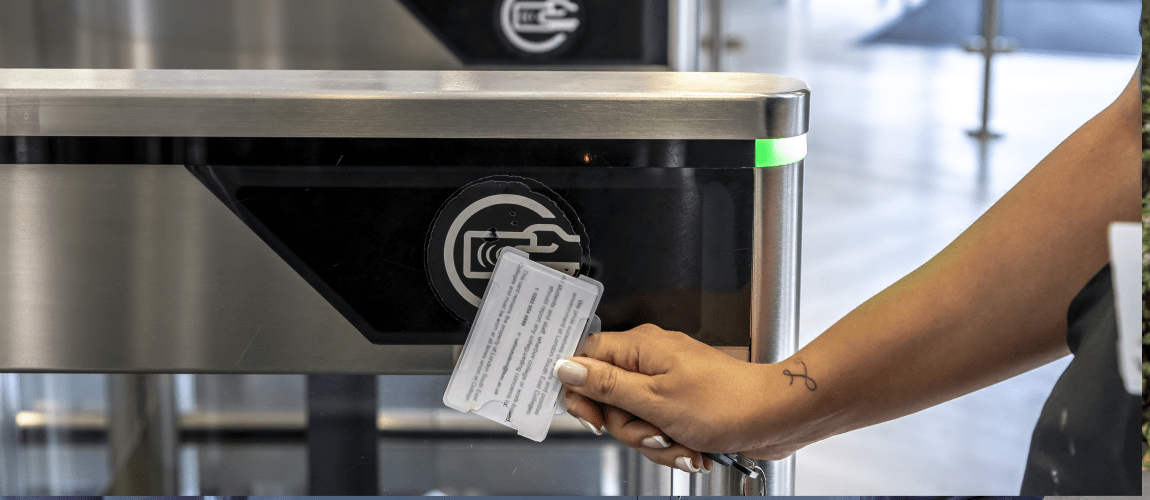
Safeguarding in education is no longer limited to policies, training, and pastoral support. It also depends on the physical environment. Schools and colleges need to know who is on site, which areas they can reach, and how quickly staff can respond when access needs to be restricted, adjusted, or reviewed.
That is why access control for schools has become such an important part of day-to-day safeguarding. In a busy education setting, there may be hundreds or even thousands of pupils, multiple entrances, shared facilities, contractors, parents, peripatetic staff, and visitors all moving through the site across the day. Relying on traditional keys and informal habits in that environment can create avoidable weaknesses.
Modern electronic access control gives schools a more controlled and more flexible way to manage entry. Salto systems are particularly relevant because they combine smart electronic locking with practical management tools that help schools control who can enter, when they can enter, and which parts of the site they can use. For schools, colleges, and multi-academy trusts, that can support stronger safeguarding without turning the campus into an unwelcoming environment.
Safeguarding depends in part on knowing that the right people are in the right places at the right times. Department for Education guidance says schools and colleges should have suitable security arrangements in place to protect pupils, staff, and premises, and should consider how visitors, boundaries, and access points are managed as part of their wider safeguarding approach.
In practice, that means access control is not simply a facilities issue. It sits between safeguarding, site management, and operational security. A school may need to prevent unauthorised access to pupil areas, restrict entry to staff-only spaces, control movement around sixth form or college buildings, protect sensitive rooms such as server cupboards or records storage, and manage access at different times of day.
Traditional locking can struggle to support that level of control. Keys can be lost, copied, borrowed, or kept after roles change. Doors may be left unlocked for convenience. Temporary access can be difficult to manage. In a safeguarding context, those weaknesses matter because they reduce visibility and accountability.
Salto is a smart access control system that uses electronic locking and digital credentials instead of relying solely on mechanical keys. Its education-focused positioning centres on being able to control who can enter, when they can enter, and where they can go across classrooms, offices, laboratories, residences, sports facilities, and shared areas.
For schools, the attraction is not just that doors can be locked and unlocked electronically. It is that access can be managed with far greater precision. Different users can be given different permissions based on role, location, and time. A member of teaching staff may need access to one block and the main entrance from early morning until evening. A cleaner may need access only to selected buildings outside teaching hours. A contractor may need temporary access that can be switched off once the job is complete.
Wireless electronic locking is particularly useful in education settings because many schools operate from a mixture of older buildings, newer blocks, temporary accommodation, and refurbished spaces. Running hard-wired security infrastructure to every door can be expensive and disruptive. Wireless locking can make phased upgrades much more practical, especially when a site needs stronger safeguarding without major building works.
The main safeguarding advantage is controlled access. Instead of every authorised adult having a broad set of keys, schools can issue permissions that reflect genuine need.
This helps in several ways. First, it reduces the number of people who can reach sensitive areas such as safeguarding offices, medical rooms, data rooms, finance offices, staff workrooms, and pupil records storage. Secondly, it allows schools to separate public-facing areas from pupil-only or staff-only spaces more clearly. Thirdly, it makes it easier to change permissions quickly when staffing, timetables, or room use changes.
That flexibility is valuable in real schools. A pastoral lead may need access to safeguarding and welfare spaces. Premises staff may need broader technical access. Supply staff may need limited access for a short period. With traditional keys, those distinctions are harder to manage cleanly. With electronic access control, they become part of the normal administration of the site.
Salto also supports the principle of least access. People do not need to hold access to every door simply because it is difficult to issue narrower permissions. From a safeguarding perspective, that is a meaningful improvement because it limits unnecessary movement around the campus and reduces the opportunities for poor key control to become a wider risk.
Visitor control is one of the clearest pressure points in school safeguarding. Reception teams need to welcome legitimate visitors while making sure unauthorised people do not move freely into teaching and pupil areas.
Electronic access control helps schools create a more controlled transition from public entrance to internal space. External doors can remain secure while still allowing managed entry. Staff can release or authorise access in a controlled way. Internal doors beyond reception can remain restricted, so entry to the site does not automatically mean unrestricted movement through the building.
Another important advantage is the audit trail. Electronic access systems can provide a record of when a credential was used and at which door. In a school environment, that can support investigations, incident review, and operational learning. It does not replace safeguarding procedures, but it can provide useful visibility where traditional keys offer none.
Many education organisations no longer operate from a single straightforward site. Multi-academy trusts, independent school groups, further education colleges, and larger campuses may have multiple blocks, annexes, sports facilities, sixth form centres, or separate sites with different risk profiles and operating patterns.
In those environments, access control needs to be both local and centralised. Local teams need practical day-to-day control over doors and users, but leadership also needs confidence that access standards are consistent across the estate. Salto systems can support that by making it easier to issue, change, and revoke permissions across multiple doors and buildings without relying on physical key handovers.
This can improve safeguarding governance as well as convenience. If a staff member changes site, leaves the organisation, or no longer needs access to certain areas, permissions can be updated far more quickly than a traditional re-keying process would allow. That is particularly valuable where estates are large or dispersed and where delays in key recovery can become a recurring problem.
Good school security should never create poor day-to-day usability. If a system feels cumbersome, staff may work around it, and that undermines the purpose of the upgrade.
That is why access control for schools has to support normal school life as well as security. Staff need to move quickly between lessons and duties, and reception teams need simple processes for visitors. Premises teams need dependable access for opening, locking, and maintenance, while senior leaders need confidence that the system supports safeguarding rather than complicating it.
Electronic locking also needs to be designed properly alongside emergency arrangements. Access-controlled doors should work in a way that supports safe escape and integrates correctly with the site’s wider safety strategy. When access control is designed and installed professionally, it can support both security and compliant operation rather than forcing a trade-off between the two.
The best starting point is not the product itself but the safeguarding and operational problem the school is trying to solve.
Some schools need tighter control over reception and visitor routes. Others need better staff access management, stronger protection for sensitive rooms, or a more practical alternative to a growing key estate. On larger campuses, the priority may be consistency across multiple buildings. In older schools, it may be the ability to upgrade access without excessive cabling and disruption.
A proper survey should identify which doors matter most, how the site is used across the day, where safeguarding risks are highest, and how access control should work in practice for staff, pupils, contractors, and visitors. From there, a phased design can often be developed so the school strengthens security without trying to change every door at once.
Ongoing maintenance and support also matter. Access control is not a set-and-forget measure. Permissions need administering, hardware needs maintaining, and the system should continue to reflect changes in staffing, room use, and safeguarding priorities. Schools benefit most when design, installation, and long-term support are treated as part of one joined-up plan.
Access control for schools is ultimately about more than doors. It is about safeguarding, accountability, and creating a site that is secure without becoming impractical.
Salto improves that picture by giving schools more precise control over who can enter, when they can enter, and where they can go. That helps schools manage visitors more safely, reduce the weaknesses that come with traditional keys, protect sensitive areas, and respond more quickly when permissions need to change.
For single sites, larger campuses, and multi-site education estates, that can make safeguarding arrangements stronger and easier to manage. When the system is designed around the way the school actually operates, access control becomes a practical tool for safer, more confident day-to-day management rather than just another piece of hardware.
Follow Us |

|

|

|
© ECS Systems 2026
ECS Systems Limited, 75 Station Rd, Sidcup DA15 7DN
|
|
|
|
© ECS Systems 2026