
Insights



The Department for Education’s Education Estates Strategy represents an important shift in the way schools, academies, colleges and responsible bodies are expected to manage their buildings, grounds and wider education estate.
While much of the discussion around education estates focuses on classrooms, roofs, heating systems, drainage, accessibility, energy use and building condition, the wider school site should not be overlooked. An education estate also includes the perimeter, entrances, car parks, pedestrian routes, access points and the systems that help control who can enter or leave the site.
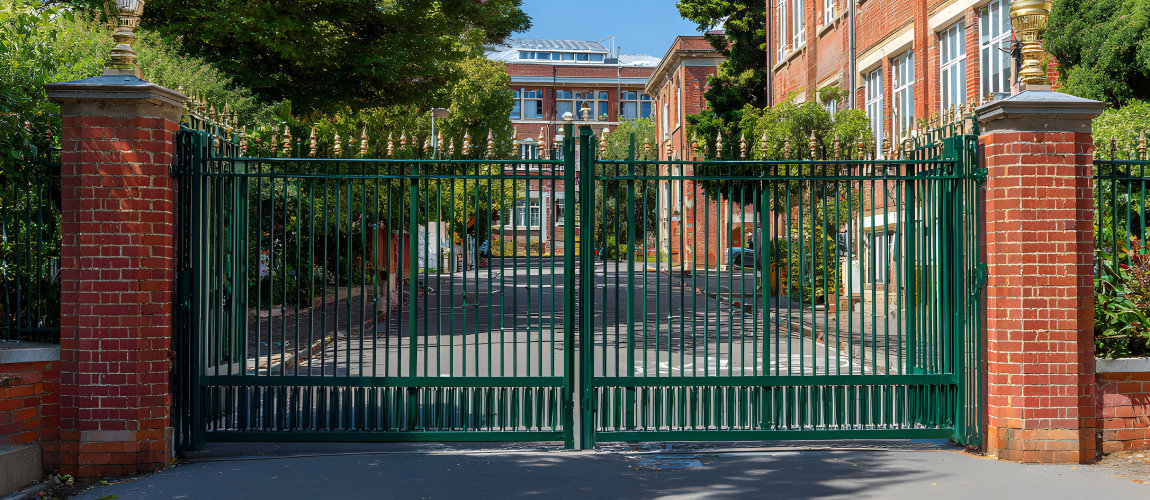
Automated gates form an important part of this wider estate.
For schools and colleges, automated gates, barriers, fencing, intercoms and access control systems are not simply entrance features. They are part of the site’s safeguarding, security, traffic management and premises safety arrangements. When they are properly specified, maintained and reviewed, they help education sites manage access, support safeguarding procedures and reduce the risk of unauthorised entry.
As the education sector moves towards more proactive, planned and data-led estate management, automated gate maintenance should form part of the wider conversation around site safety, condition, compliance and long-term asset planning.
The Education Estates Strategy is the government’s long-term plan for improving and managing the school and college estate in England. It is intended to support education buildings and sites that are safe, suitable, sustainable and sufficiently sized.
A central theme of the strategy is the move from reactive maintenance towards more proactive estate management. In practical terms, this means schools, academy trusts, local authorities, colleges and responsible bodies are being encouraged to understand the condition of their estate, plan maintenance more effectively and address risks before they develop into urgent or costly issues.
This approach is not only relevant to buildings. It is also relevant to external areas, entrances, boundaries and access systems.
On an education site, a failed or poorly maintained automated gate can create operational, safeguarding and safety issues. A gate stuck open may leave a site exposed. A gate stuck closed may affect staff access, deliveries, transport, emergency access or the normal running of the school day. A gate that operates incorrectly may present a safety risk to vehicles, pedestrians, pupils, staff or visitors.
For this reason, automated gates should be viewed as part of the wider education estate, not as a standalone item.
Schools and colleges need to control access carefully. Unlike many commercial premises, education sites often have complex daily access requirements. Staff, pupils, parents, visitors, contractors, deliveries, catering vehicles, transport providers and emergency services may all require access at different times and for different reasons.
Automated gates can help manage these movements in a controlled way.
They may be used to:
In an education environment, automated gates are not simply a convenience. They are often a key part of the site’s wider access control and safeguarding strategy.
The Education Estates Strategy encourages a better understanding of estate condition, risk, maintenance planning and long-term investment. Automated gates fit naturally into this approach.
A gate system may appear to be working, but that does not necessarily mean it is safe, compliant, reliable or suitable for current site use. Automated gates are mechanical and electrical systems. They include moving components, motors, hinges, tracks, control panels, safety edges, photocells, access
control devices, intercoms and release mechanisms.
Over time, these components can wear, move, become damaged or fall out of alignment. Weather exposure, frequent use, ground movement, accidental impact and changes in traffic levels can all affect how a gate performs.
Without regular maintenance, small issues can become larger problems.
A proactive approach helps education sites identify potential faults earlier, reduce the likelihood of sudden failure and support safer operation.
Many schools only arrange gate repairs when a system stops working. This is common across many areas of estate management, particularly where budgets are limited and premises teams are under pressure.
However, the principle behind the Education Estates Strategy is that planned, preventative maintenance is usually more effective than waiting for failure.
For automated gates, this means schools and colleges should consider whether they have a structured maintenance regime in place. This may include routine servicing, safety checks, inspection of moving parts, testing of safety devices, review of access control equipment and clear maintenance records.
Planned automated gate maintenance can help education sites:
A planned approach also gives premises teams and responsible bodies a clearer picture of the condition of their access systems.
Automated gate safety is especially important in education environments because pupils, staff, parents and visitors may all be nearby during gate operation.
Potential risks from poorly maintained or incorrectly operating gates can include:
Regular inspection and maintenance help reduce these risks.
Education sites should consider not only whether a gate opens and closes, but whether it operates safely in the real conditions of the site. This includes the volume of vehicle traffic, pedestrian routes, pupil movement, visibility, supervision, emergency access, staff operation and how visitors are admitted.
The way a gate is used each day should influence how it is maintained and reviewed.
One important issue for schools is the relationship between automated vehicle gates and pedestrian access.
Automated vehicle gates are generally not intended to be used as pedestrian gates. Where pupils, staff or visitors need to enter on foot, the site should consider whether there is a separate, safe and clearly defined pedestrian entrance.
This is particularly important during peak times such as morning arrival, afternoon collection, after school clubs, open evenings, events and community use.
A gate maintenance review should therefore consider more than the mechanical condition of the gate. It should also consider how people move around the entrance and whether the current arrangement supports safe access.
Schools, academies and colleges do not need to become gate engineering specialists, but they should have a clear understanding of the systems installed on their site.
Useful questions include:
Regular servicing helps identify defects, wear and safety issues before they become more serious.
Maintenance records help demonstrate that the system has been inspected and that known issues have been addressed or monitored.
Safety edges, photocells, force limitation and other protective devices should be checked as part of a
suitable maintenance process.
A gate installed many years ago may not reflect current pupil numbers, traffic flow, visitor patterns,
safeguarding requirements or site layout.
Where possible, pedestrian access should be clearly separated from vehicle access to reduce risk.
Emergency access arrangements should be understood, especially in the event of power failure, system failure or staff absence.
Keypads, fobs, intercoms, video entry, proximity readers and remote release systems should be reviewed to ensure they still meet the needs of the site.
Noise, slow movement, misalignment, damaged hinges, rust, ground movement or repeated faults may indicate the need for maintenance or further review.
The Education Estates Strategy places importance on understanding the condition of assets across the education estate. Automated gates should be included in that thinking.
For a school or college, an automated gate is an asset with a lifecycle. It has installation costs, maintenance requirements, safety considerations, operating risks and eventual replacement needs.
Including automated gates in estate planning can help responsible bodies understand:
This information can support better decision-making and more effective budget planning.
Automated gates are often connected to wider access control systems. These may include intercoms, video entry, fobs, keypads, card readers, remote release systems, automatic number plate recognition, CCTV integration or visitor management processes.
If a gate is maintained but the access control system is outdated or unreliable, the overall entrance may still not function effectively.
For example, a gate may open and close correctly, but the school may still experience issues if:
Gate maintenance and access control should therefore be reviewed together.
Many education sites have changed significantly over time. Schools may have expanded, added new buildings, changed entrances, increased pupil numbers, introduced nursery provision, opened specialist units, changed parking arrangements or increased community use.
These changes can affect how automated gates and access control systems should work.
A gate that was suitable when it was first installed may no longer be the right solution for the current site. Increased vehicle movement, more visitors, additional contractors or different safeguarding procedures can all place new demands on the entrance.
As education estates evolve, automated gates should be reviewed to make sure they remain safe, suitable and effective.
For multi-academy trusts, local authorities, college groups and organisations managing multiple education sites, gate maintenance can become more complex.
Different sites may have different types of gates, different installers, different maintenance arrangements, different access control systems and different levels of record keeping.
A more consistent approach can help responsible bodies understand risk and condition across the estate.
This may include:
This type of estate-wide visibility supports the broader aims of proactive education estate management.
Schools and colleges should consider reviewing an automated gate if they notice:
These issues do not always mean a gate needs replacing. In many cases, servicing, adjustment, repair or targeted upgrades may be sufficient. However, they should not be ignored.
Safeguarding is a key concern for every school and college. Physical security measures alone do not create a safeguarding culture, but they do support safeguarding arrangements when they are properly designed and managed.
Automated gates can help schools control access to the site, reduce unauthorised entry and provide a clearer process for admitting visitors. They can also support lockdown procedures, visitor management and the separation of public and pupil areas.
However, safeguarding measures must remain practical. If a gate system is unreliable, inconvenient or poorly configured, staff may develop workarounds. These workarounds can undermine the original purpose of the system.
Regular maintenance and review help ensure the gate remains both secure and usable.
Education sites need to balance several priorities. A gate system should support security, but it should also allow safe and appropriate access.
This means considering:
A well-maintained automated gate should support the daily operation of the school, not create unnecessary barriers or delays.
As part of a wider estate review, schools and colleges may wish to ask:
These questions can help education sites take a more informed approach to automated gate maintenance.
Record keeping is an important part of proactive estate management. For automated gates, schools should ideally be able to evidence when systems have been inspected, what work was carried out and whether any issues were identified.
Useful records may include:
Good records help schools understand condition, demonstrate responsible management and plan
maintenance more effectively.
Automated gates can represent a significant investment for an education site. Planned maintenance helps protect that investment.
Regular servicing can reduce avoidable damage, improve reliability and extend the useful life of the system. It may also help identify when a repair is no longer economical and when replacement should be considered.
This supports one of the wider principles of strategic estate management: making informed decisions based on condition, risk, cost and long-term value.
The Education Estates Strategy is likely to encourage schools, academy trusts, colleges and responsible bodies to look more closely at the condition and management of their estates.
As part of that process, it is important that external areas and access systems are not forgotten.
Automated gates, barriers, fencing and access control systems play an important role in safeguarding, security, traffic control and daily site operation. If they are not maintained, they can create avoidable risk and disruption.
By including automated gate maintenance in wider estate planning, education sites can take a more complete and proactive approach to premises management.
The Education Estates Strategy encourages a more proactive, planned and informed approach to managing school and college estates.
For education sites, this should include automated gates and access control systems. These systems help manage access, support safeguarding and protect the wider site, but they must be maintained, reviewed and recorded properly.
Automated gate maintenance is not only about fixing faults. It is about understanding condition, reducing risk, supporting safe operation and planning for the long-term needs of the education estate.
Schools, academies, colleges and responsible bodies may wish to review their automated gates as part of wider estate planning, particularly where systems are ageing, maintenance records are incomplete or site usage has changed.
For further information about automated gate maintenance, access control or perimeter security on education sites, please feel free to contact ECS Systems.
Follow Us |

|

|

|
© ECS Systems 2026
ECS Systems Limited, 75 Station Rd, Sidcup DA15 7DN
|
|
|
|
© ECS Systems 2026